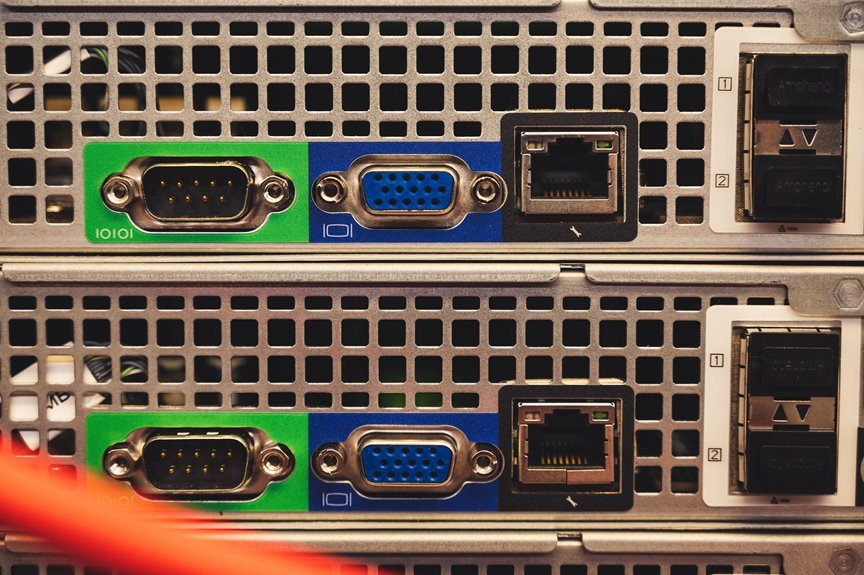
The pair 172.16.0.250.8090 denotes a private IPv4 address with a specific service port, used to identify an internal endpoint. It clarifies service targeting, access control, and diagnostic scope within LAN topologies. Practically, it guides how tools map traffic, verify reachability, and log interactions. Proper validation and documentation prevent misuse and improve remediation consistency. Its significance invites further discussion on validation approaches and security implications.
What 172.16.0.250.8090 Likely Represents in Networks
A 172.16.0.250.8090 address sequence is not a valid standard IPv4 address, which normally comprises four octets separated by dots (e.g., 172.16.0.250).
In practice, this sequence suggests a symbolic or non-routable placeholder used within internal networks. It informs routing topology decisions and may drive diagnostic tooling configurations without implying global reachability or standard addressing semantics.
Interpreting Private IPv4 Plus Port : Practical Scenarios
Private IPv4 addresses paired with ports clarify service endpoints on internal networks and aid in defining application scope, security policies, and diagnostic targets. In practical scenarios, analysts map endpoints to discrete services, enabling scoped access control and targeted monitoring.
The discussion addresses networking myths and troubleshooting myths, emphasizing precise configurations, minimal noise, and clear demarcation between internal hosts and exposed interfaces.
How to Validate and Troubleshoot the 172.16.0.250.8090 Identifier
Validating and troubleshooting the 172.16.0.250.8090 identifier requires a precise, methodical approach to confirm that the internal endpoint and its associated port (8090) are correctly resolved, reachable, and secure.
Efficient latency measurement and targeted port scanning reveal reachability, response times, and potential blockers, enabling disciplined remediation without exposing unnecessary surface area or compromising operational freedom.
Security, Logging, and Documentation Best Practices for This Pattern
Security, logging, and documentation for this pattern should emphasize minimal exposure, auditable events, and clear maintainability. The approach prioritizes security auditing and traceable changes, with strict access controls and immutable logs. Port mapping configurations are documented, versioned, and reviewed. Anomalies trigger alerts, and remediation steps are standardized. Documentation favors clarity over verbosity, enabling independent auditing while preserving operational freedom for administrators and developers.
Frequently Asked Questions
Can 172.16.0.250.8090 Be Used in WAN Environments?
Answer: Yes, but with caveats. The address 172.16.0.250:8090 can function in WAN scenarios if routed properly, yet it uses a private IPv4 range and should align with network policies, NAT, and firewall rules for reliable reachability. WAN viability, private ranges
What Software Tools Recognize This IP:Port Format?
Software tools that recognize this ip:port format exist in network scanners and log parsers; however, privacy concerns and firewall syntax constraints shape their use. They can parse addresses like 172.16.0.250:8090 without broader implications for freedom.
Are There Privacy Concerns With Sharing Such Identifiers?
Privacy concerns arise; sharing identifiers like 172.16.0.250.8090 can elevate data exposure risk, even if internal. The detached analysis notes inherent exposure potential, urging caution, disciplined disclosure, and contextual minimization to preserve freedom. Irony highlights unintended consequences.
How Does This Pattern Affect Firewall Rule Syntax?
The pattern affects firewall rule syntax by requiring precise IP:port matches and appropriate protocol filters, enabling exact allow/deny actions. two word discussion idea1 and two word discussion idea2 guide configuration, reducing ambiguity while preserving flexible, freedom-friendly policy expression.
Can This Be Confused With DNS or Domain-Based References?
Yes, it can be confused with DNS or domain references due to similar patterns; IP addressing and port notation may resemble hostname syntax, causing ambiguity in parsing and rule interpretation for network configurations and firewall policies.
Conclusion
This pattern likely indicates a private IPv4 address paired with a service port, used to target internal endpoints within a LAN rather than a routable external host. Interpreting 172.16.0.250.8090 as a composite identifier aids topology mapping, diagnostics, and access control. While plausible, cautious validation is essential: confirm service binding, firewall rules, and documentation. If verified, it supports auditable logs and secure segmentation; if not, misinterpretation could mislead troubleshooting and risk exposure or misconfiguration.